Haunted House · Redemption Church Plano
How to Deal With Draining Relationships
Some relationships leave you tired. Others leave you empty. Here is a biblical way to love people without becoming their source of life.
You know the feeling when one relationship starts taking more than you know how to give. The calls, the crisis, the guilt, the pressure – and somehow it still never feels like enough. If you love someone but feel yourself getting drained in the process, this conversation is for you.
Watch & listen
Hear the full message.
Resources
Use these printable resources to follow along, review the message, or keep working through the ideas during the week.
The real-life problem
When helping someone starts consuming you
Not every difficult relationship is unhealthy. Some people are grieving. Some are overwhelmed. Some are immature, stuck, or walking through a genuinely hard season.
But some relationships become a repeated pattern of crisis, guilt, emotional dependence, pressure, or rescue. You keep giving. They keep taking. Over time, the relationship starts consuming your peace, time, energy, and attention.

The name on the phone
Sometimes the warning sign is not a dramatic blowup. It is the feeling you get when their name appears on your phone. You tense up before you answer because you already know what is coming: need, crisis, guilt, or emotional weight.
That does not automatically make the person bad. But it may reveal a pattern that needs wisdom and a boundary.
Is this relationship draining you?
Pay attention to repeated patterns, not just one hard day.
Someone may genuinely need support. But when the same pattern keeps repeating, wisdom means noticing what is happening.
Constant crisis
Their emergencies repeatedly become the center of your life.
Guilt and pressure
You feel manipulated whenever you try to create healthy space.
No responsibility
You keep carrying choices and consequences that belong to them.
You feel depleted
You regularly leave conversations anxious, resentful, or emotionally empty.
Unlimited access
They expect immediate availability and ongoing rescue.
Your life shrinks
The relationship crowds out your family, peace, calling, and time with Jesus.
Free field guide
Could this pattern be hiding in your life?
The Haunted House Field Guide to the Monsters Within helps you identify unhealthy patterns, turn on the light with Scripture, and choose one honest next step.
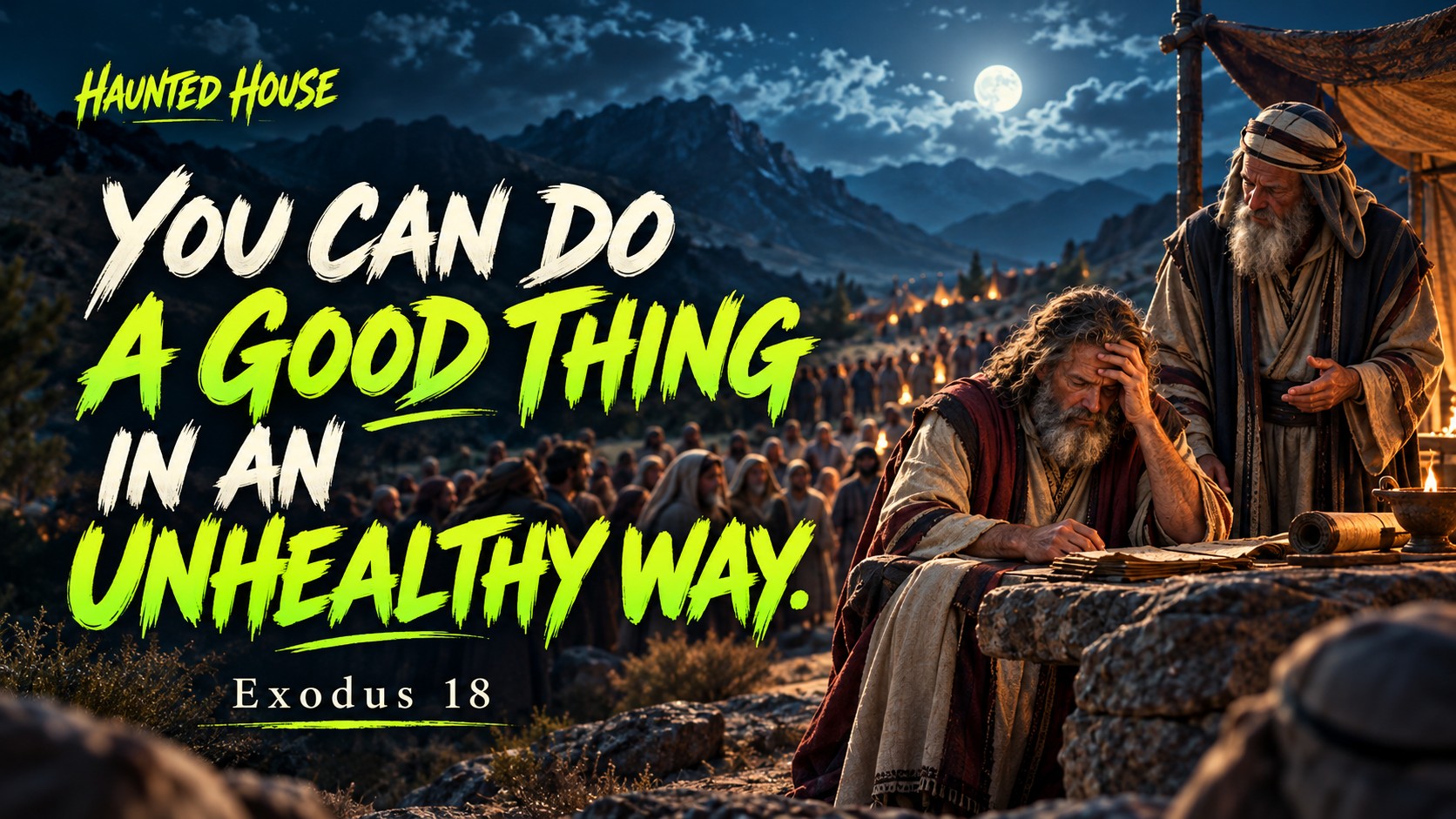
Exodus 18
You can do a good thing in an unhealthy way.
Moses was helping people from morning until evening. Marriage problem? Moses. Property problem? Moses. Family conflict? Moses. Everybody’s problem became Moses’ problem.
What you are doing is not good. You and these people who come to you will only wear yourselves out.
Helping people is good. But Jethro saw what Moses could not: even a good thing can become unhealthy when one person tries to carry everything.
Jethro did not tell Moses to stop loving people. He told Moses to stop carrying everything himself. The answer is not love less. The answer is love wisely.
Burden or load?
Are we supposed to carry burdens, or let people carry their own load?
The answer might surprise you: we are called to do both.
Galatians 6 tells Christians to carry one another’s burdens, and just a few verses later says each person should carry their own load. Those are not contradictions. They describe two different kinds of responsibility.
Carry each other’s burdens, and in this way you will fulfill the law of Christ.
A burden is something unusually heavy – grief, illness, loss, crisis, deep weakness. Christian love steps in and helps carry what another person cannot carry alone.
for each one should carry their own load.
A load is the ordinary responsibility that belongs to a person – their choices, obedience, repentance, follow-through, and consequences.
Carry the burden
Show up in grief. Help in crisis. Pray. Encourage. Give practical support when life becomes too heavy.
Do not steal the load
Do not keep doing for someone what they need to learn to do themselves. Love should support growth, not replace responsibility.
Christian boundaries
Love does not require unlimited access.
In vampire folklore, a vampire has to be invited in. That is folklore, not theology, but it gives us a useful picture. Some unhealthy patterns keep draining us because we keep leaving the door open.

A boundary is not revenge. It is not hatred. It is not abandoning someone who is hurting. A boundary is clarity about what you will carry, what you will not carry, and what kind of access is healthy.
What does a boundary sound like?
Try using sentences like these to begin the conversation you actually need to have. Keep the sentence clear. Keep it calm. Do not over-explain.
I care about you, but I cannot ________. I can ________ instead.
If ________ happens, then I will ________.
I want to support you, but I cannot be your only source of help.
Practical response
How to set a boundary without becoming cold
Healthy boundaries are not about becoming harsh. They are about becoming clear, truthful, and consistent.
Name the pattern
Be honest about what keeps happening. Is this a temporary hard season, or a repeated pattern of control, dependency, manipulation, or rescue?
Decide what is yours
Ask what you are actually responsible for, and what belongs to the other person.
Say one clear sentence
Do not build a courtroom argument. Speak simply, kindly, and clearly – then follow through.
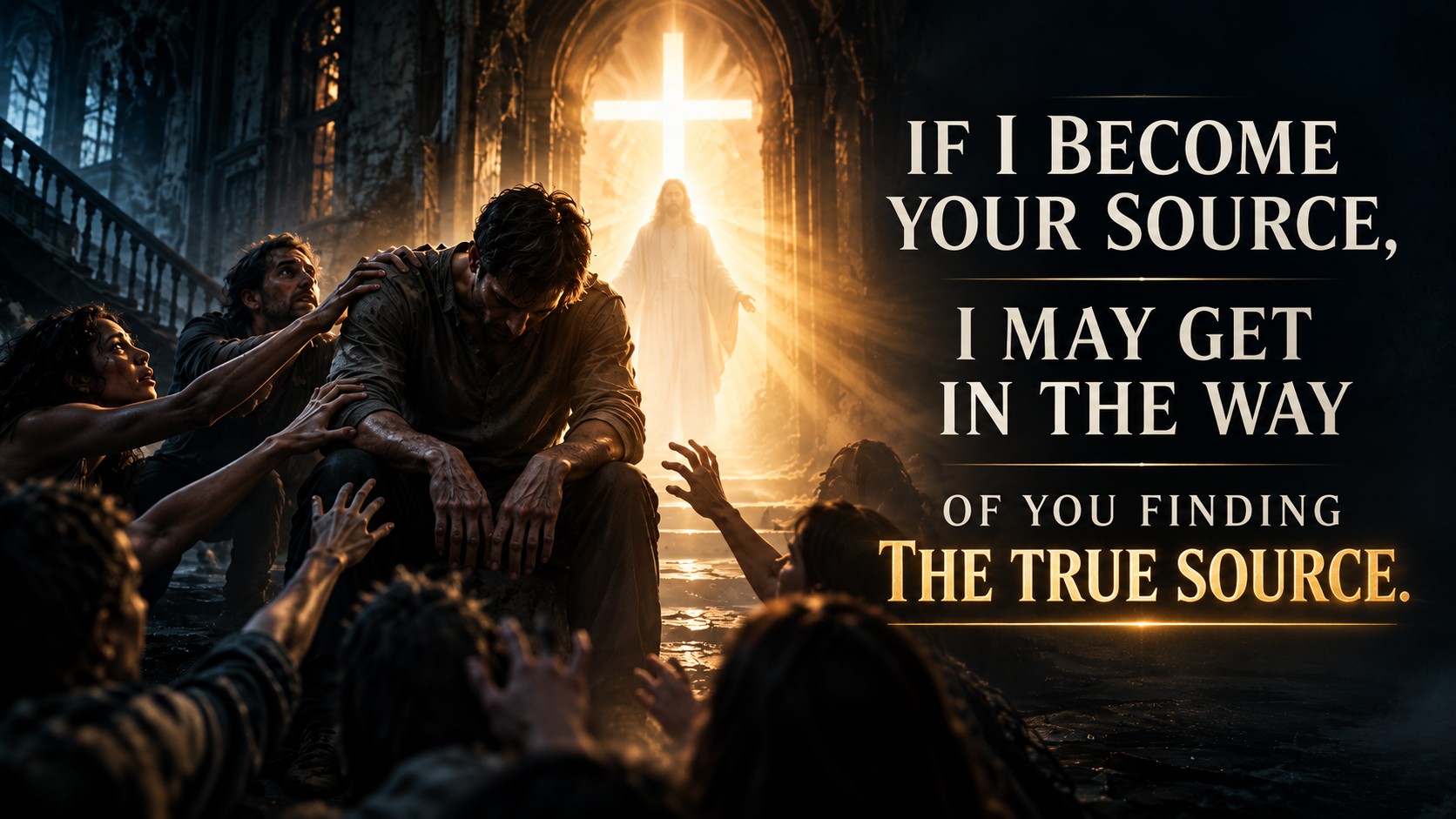
The deeper issue
You were never meant to be another person’s source of life.
One of the deepest problems in a draining relationship is that someone may begin looking to you for peace, stability, identity, rescue, or wholeness that no human being can provide.
Unless you eat the flesh of the Son of Man and drink his blood, you have no life in you.
Jesus is not giving us vampire theology. He is making a much bigger claim: life is found in Him.
No one takes it from me, but I lay it down of my own accord.
Jesus gave His life willingly. That is different from everyone getting to take whatever they want from you.
Vampires drain you – but draining yourself does not save them.
You can give more time. More energy. More reassurance. More access. But if somebody has made you their source, the pattern is still broken.

You cannot give enough affirmation to heal somebody’s identity. You cannot rescue someone enough times to create maturity. You cannot make another person whole. And you cannot save them.
That does not mean you stop loving. It means you stop trying to do what only Jesus can do.
Jesus and boundaries
Jesus loved deeply without treating every need like an emergency.
Yet the news about him spread all the more, so that crowds of people came to hear him and to be healed of their sicknesses. But Jesus often withdrew to lonely places and prayed.
There were still needs. There were still people waiting. And Jesus withdrew.
He did not let the crowd determine His schedule. He did not say yes to every demand simply because the demand was real.
Sometimes the most loving thing you can do is help. Sometimes the most loving thing you can do is step back, tell the truth, and stop feeding a harmful pattern.
Your next step
Close the door. Come to Jesus.
Notice the pattern
Where are guilt, pressure, control, or emotional over-dependence draining you?
Start one boundary conversation
Use one clear sentence and begin the conversation you have been avoiding.
Receive life from Jesus
You were never meant to be another person’s source. Come back to the One who gives life.
FAQ
Questions about draining relationships and Christian boundaries
How do I deal with emotionally draining people?
Name the pattern, decide what belongs to you, and set a clear limit. Compassion does not require unlimited emotional access.
Is it biblical to set boundaries?
Yes. Scripture teaches both burden-bearing and personal responsibility. Boundaries can be a wise way to love without taking over another person’s life.
Can I love someone without giving them unlimited access to me?
Yes. Love and unlimited availability are not the same thing. You can care deeply while refusing manipulation, control, or unhealthy dependence.
How do I know if I am helping or enabling?
Healthy help supports growth and responsibility. Enabling repeatedly removes consequences or carries responsibilities the other person needs to face.
What does the Bible say about difficult relationships?
The Bible calls us to compassion, forgiveness, wisdom, truth, and responsibility. Following Jesus does not mean letting another person’s dysfunction control your life.
What if the draining person is someone I love?
That is often when boundaries matter most. Love may mean staying present with clearer limits, honest conversation, prayer, and a refusal to become their savior.

Pastor Chris
Have a question about this message or faith?
Chris Fluitt is the pastor of Redemption Church in Plano. He loves helping people find and follow Jesus and take practical next steps in their faith.
If this brought up a question, a struggle, or a relationship situation you are trying to navigate, you do not have to figure it out alone.
Redemption Church · Plano, Texas
You are welcome here.
If you are looking for a church home in Plano, or simply exploring faith and looking for a next step, we would love to meet you.
Redemption Church
Sundays at 4:30 PM
2001 Independence Pkwy, Plano, TX 75075

Pastor Chris Fluitt
Pastor Chris Fluitt serves Redemption Church in Plano, Texas. He helps people take honest next steps toward Jesus.